Skip to page content
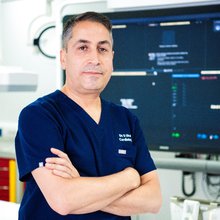
Dr Salahaddin Ubaid.jpg

Date of registration

18 Jul 2006

Primary medical qualifications

MBChB, MRCP, MD

Consultant Interventional Cardiologist

About Dr Salahaddin Ubaid

Dr Salahaddin Ubaid is a UK-trained Consultant Interventional Cardiologist at Gloucestershire Hospitals NHS Foundation Trust, providing specialist care at Cheltenham General Hospital and Gloucestershire Royal Hospital.

Dr Ubaid graduated in 2001. He obtained Membership of the Royal College of Physicians (MRCP) in 2007 and was subsequently elected Fellow of the Royal College of Physicians (FRCP). He successfully completed the European Examination in Core Cardiology (formerly the Knowledge Based Assessment) in 2014 before completing higher specialist training in General and Interventional Cardiology in the West Midlands.

During his specialist training, Dr Ubaid worked in several major tertiary cardiac centres, including University Hospitals Birmingham, University Hospitals of North Midlands, University Hospitals Coventry and Warwickshire, and New Cross Hospital. Following completion of his specialist training, he undertook a 12-month advanced fellowship in Interventional Cardiology at University Hospitals Birmingham, where he further developed expertise in complex coronary intervention and structural heart interventions, including Transcatheter Aortic Valve Implantation (TAVI).

Dr Ubaid was awarded the European Association of Percutaneous Cardiovascular Interventions (EAPCI) Certificate of Excellence in Interventional Cardiology Training following completion of an advanced two-year training programme. During his specialist training, he also obtained full British Society of Echocardiography (BSE) accreditation in Transthoracic Echocardiography (2012–2017) and Transoesophageal Echocardiography (2017–2022).

He was awarded a Doctor of Medicine (MD) degree by the University of Birmingham in 2020 for research into antiplatelet therapy in patients presenting with acute myocardial infarction. His research has been presented at national and international cardiology conferences. In 2017, he was runner-up for the British Cardiovascular Intervention Society (BCIS) Young Investigator Award and has authored numerous peer-reviewed publications in cardiovascular medicine.

Dr Ubaid provides comprehensive care across both general and interventional cardiology. His clinical interests include coronary artery disease, complex coronary intervention, cardiovascular disease prevention, cardiac rehabilitation, and sports cardiology. He has also completed the European Association of Preventive Cardiology Sports Cardiology Learning Programme and was awarded a Certificate of Completion.

Dr Ubaid has a longstanding interest in medical education and previously served as Honorary Clinical Lecturer and Clinical Tutor at the University of Bristol between 2022 and 2025. He remains actively involved in medical education and is committed to the training and development of future healthcare professionals.

Symptoms

  • Chest pain
  • Shortness of breath
  • Palpitations
  • Dizzy spells / lightheadedness
  • Faints / blackouts / collapse
  • Heart murmurs
  • High blood pressure related symptoms
  • Exercise related symptoms such as palpitations, shortness of breath and dizziness

Conditions

1: General and Interventional Cardiology

  • Coronary artery disease (stable and unstable angina, heart attack)
  • Spontaneous coronary artery dissection (SCAD)
  • Heart rhythm problems such as atrial fibrillation and atrial flutter
  • Heart valve diseases, mainly aortic valve stenosis, mitral valve prolapse and mitral valve regurgitation
  • High blood pressure (Hypertension)
  • High Cholesterol including familial hypercholesteraemia
  • Heart failure
  • Stress induced cardiomyopathy, also known as Broken-heart syndrome or Takotsubo cardiomyopathy
  • Hypertrophic cardiomyopathy
  • Cancer treatment and your heart
  • COVID-19 and your heart
  • Diabetes and your heart (diabetes related cardiac conditions)
  • Endocarditis
  • Older adults and heart disease
  • Myocarditis
  • Pulmonary embolism (clots in the lungs)
  • Pericardial diseases such as pericarditis

2: Sports Cardiology

  • Identification of cardiovascular diseases and risk stratification in individuals participating in recreational (for leisure) and competitive (for performance and winning) sports
  • Assessment, investigations and management of sport related heart symptoms such as palpitations, shortness of breath and dizziness
  • Exercise recommendations (what to do and what not to do) for exercise and sports in healthy individuals
  • Exercise recommendation and prescription for patients with:
    • Angina
    • Aging individuals
    • Atrial fibrillation
    • Aortopathy
    • Heart attack
    • Heart valve disease, aortic and mitral valves
    • Heart failure
    • Heart rhythm abnormalities
    • Cardiomyopathies
    • Congenital heart disease
    • Myocarditis and pericarditis
    • Implantable cardiac devices
    • Cancer patients
    • Chronic kidney disease
    • Pregnancy
    • Return to sport and exercise following cardiovascular events such as heart attack
  • Sports pre-participation cardiovascular screening (competitive and recreational sports) for individuals of all ages, aimed at the detection and management of heart conditions associated with sudden cardiac death (SCD). This includes:
    • Screening for members of various sporting disciplines
    • Screening athletes with a family history of sudden cardiac death
    • Cardiovascular Safety assessment at Sports Arenas
    • Training sports organizations staff, schools and other sports institution’s personnel the skills of cardiopulmonary resuscitation (CPR) and the use of Automatic External Defibrillators (AED)
    • Wearable technology and your heart (smart watches and fitness trackers)

3: Cardiovascular Risk Factors; Assessment, Prevention, Management, Secondary Prevention and Cardiac Rehabilitation

  • Cardiovascular risk assessment in healthy individuals (assess risk of developing cardiovascular events)
  • Cardiovascular risk assessment in patients undertaking non-cardiac operations
  • Cardiovascular disease prevention (Heart and vascular diseases such as heart attack and stroke)
  • Cardiovascular rehabilitation (physical and psychological recovery following a cardiac event such as a heart attack)

Qualifications

  • Certificate of Excellence in Interventional Cardiology Training
    The European Association of Percutaneous Cardiovascular Interventions, (EAPCI) Paris, France June 2020 (Completions of two-year training programme)
  • Certificate of Completion of Sports Cardiology Training from the European Association of Preventative Cardiology Paris, France July 2022
  • Doctor of Medicine (MD), University of Birmingham UK 20/02/2020
  • Certificate of Completion of Cardiology Training (General and Interventional Cardiology) General Medical Council 31st August 2019
  • British Society of Echocardiography Transoesophageal Echocardiography Full Accreditation (TEE) 15th October 2017
  • British Society of Echocardiography Transthoracic Echocardiography Full Accreditation (TTE) 24th October 2012
  • Cardiology KBA (Knowledge Based Assessment) EECC, European Society of Cardiology and British Cardiovascular Society. June 2014
  • MRCP UK March 2007
  • MBChB 1st July 2000 University of Salahaddin Medical School, Erbil-Iraq

Skills and inpatient Services

  • Coronary Angiography and Coronary Angioplasty (stenting), a procedure used to widen blocked or narrowed coronary arteries
  • Transthoracic Echocardiography (Fully accredited from the British Society of Echocardiography)
  • Transoesophageal Echocardiography (Fully accredited by the British Society of Echocardiography)
  • Coronary Physiology Assessment
  • Shockwave Intravascular Lithotripsy, is a novel device that modifies calcified lesions via calcium fracture to allow for effective stent deployment
  • Rotational Atherectomy, an instrument used to break accumulated calcium in the coronary arteries for effective stent deployment
  • Laser Coronary Atherectomy, a technique used to remove blockages from coronary arteries
  • Intravascular Ultrasonography (IVUS), provides real time view of the inside of the coronary arteries and allows accurate stents deployment and expansion
  • Optical Coherence Tomography (OCT), is an imaging modality that uses near-infrared light to provide high-definition images of the coronary arteries
  • Intra-aortic Balloon Bump Insertion, which helps support blood pressure whilst undertaking complex coronary stenting procedures and in patients who present with heart attack associated with significant drop in blood pressure, known as cardiogenic shock
  • Arterial Closure/Compression Devices, used to close site of artery puncture following coronary angiography/angioplasty
  • Angiographic Assessment of Coronary and Myocardial Blood Flow
  • Pericardiocentesis
  • Ultrasound Guided Puncture of Peripheral Arteries

Outpatient Services

  • Interventional Cardiology
  • General Cardiology
  • Sports Cardiology
  • Cardiovascular Disease Risk Assessment and Prevention